
The area of photonics has actually seen exceptional improvements, particularly in the growth of different modulators that play essential roles in various optical applications. Among these, fiber acousto-optic modulators (AOMs) and their numerous variations, such as space AOMs and free-space AOMs, stand apart because of their versatility and performance. An acousto-optic modulator utilizes audio waves to manage the intensity, frequency, or stage of light travelling through a medium, supplying a reliable method for pulse modulation. With the growing need for high-resolution and precision applications, these devices have come to be integral in areas like telecommunications, medical imaging, and clinical research.
Among one of the most sought-after features in laser technology is ultra-narrow linewidth, commonly connected with single-frequency lasers. These lasers create light with an exceptionally narrow spectral size, making them suitable for different elaborate applications, including meaningful interaction systems and high-resolution spectroscopy. A fiber-coupled AOM, which incorporates the AOM into a fiber optic system, gives smooth combining with single-frequency fiber lasers. This integration shows the fad towards enhanced density and efficiency in optical systems without giving up efficiency.
The energy of fiber optic delay lines can not be overstated, particularly in developing innovative optical systems that require precise timing and synchronization. These delay lines harness the fundamental buildings of optical fibers to take care of light signals successfully, enabling designers and researchers to explore high-speed data transmission or complex timing trying outs very little loss of integrity. The electric optical fiber delay line works as a main component in this context, facilitating the adjustment of light signals to match particular needs.
Explore opto acoustic modulator the most recent innovations in photonics, focusing on the essential duty of fiber acousto-optic modulators in improving laser applications, telecommunications, and precision optical systems for varied markets.
Modulators are vital in laser systems, playing an important duty in changing constant wave outputs into pulse layouts. Acousto-optic Q-switch modulators serve this precise objective, enabling fast modulation of laser outputs, which results in high-peak power pulses.
The distinction between acousto-optic switches and modulators is a vital facet of recognizing just how these devices work in various scenarios. In comparison, a modulator readjusts the light’s residential properties, directly affecting the beam’s features.
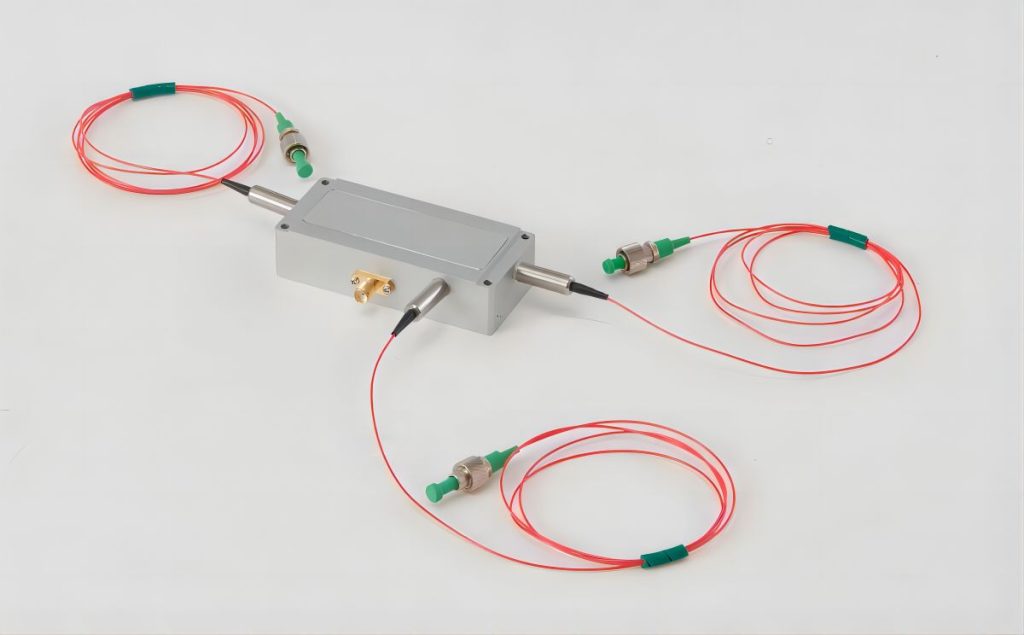
Acousto-optic devices have significantly gotten grip in the market, driven by the escalating need for innovative optical innovations. The acousto-optic modulator market is experiencing substantial growth due to applications in telecoms, army systems, and commercial production.
Moreover, the attributes of narrow linewidth laser resources are essential to specific applications, where comprehensibility and accuracy are extremely important. Narrow linewidth fiber lasers exhibit secure exhaust with marginal spectral spread, catering to applications in fiber-optic communications and noticing technologies. These qualities are vital when dealing with long-distance data transmission, where signal deterioration can considerably affect the quality of information obtained. Combining these fibers with innovative modulators enables scientists to discover brand-new frontiers in optical interaction systems.
Acoustic optical deflectors contribute to the versatility of optical systems, using a method to manipulate light dynamically and efficiently by utilizing acoustic waves as the controlling mechanism. Such devices can be located in different applications, from laser scanning systems to innovative imaging methods. By utilizing the principles of acousto-optics, these deflectors help in accomplishing precise and fast alterations in the beam of light’s trajectory without the need for complicated mechanical components.
In exploring the sorts of pulse modulation, one understands the complexities and range intrinsic in the field. Pulse modulation techniques, such as pulse-width modulation (PWM) and pulse-position modulation (PPM), permit manipulation of light based upon emission to create varying signal types. These strategies promote developments in photonics and electronic devices, from controlling laser outputs to enhancing the efficiency of fiber optic systems.
Further factor to consider of optical passive components reveals their crucial duty in improving system integrity. These components, which include isolators, couplers, and filters, assist in the company and management of light within intricate optical arrangements without the requirement for active participation. Their payment to general system performance is critical, largely when integrated with modulators and various other vibrant optical devices. Notably, the seamless combination of passive and energetic components defines the ability of modern photonic systems.
The growing concentrate on space applications emphasizes the demand for robust and reputable optical systems that can work efficiently in extreme problems. Space acousto-optic modulators, specifically, suit the unique needs of space objectives, where aspects such as radiation exposure and temperature level fluctuations can significantly impact functionality. The growth of space-grade acousto-optic devices makes certain that interaction and data collection remain uninterrupted in the severe atmospheres of space.
Acousto-optic Q-switching stands for one of the most efficient methods of generating high-energy pulses, necessary for applications ranging from laser marking to medical procedures. The modulation abilities integral in AOMs permit them to adapt to differing needs, enhancing pulse period and energy output. They supply an innovative path to elevate laser applications across diverse areas.
As we dig further into the future of photonics, it comes to be significantly clear that development in laser modulators and acousto-optic technologies is critical. The innovations in modulator drivers enhance the performance with which EOMs and aoms run, making it possible for faster and much more dependable performance. The crossover between growths in modulation and the enhancing need for greater data transfer and lower latency in interaction systems suggests a future rich with chances for reinforced optical interactions.
Comprehending the essential technicians that underpin acoustic optical modulators will bring about premium layout and efficiency renovations as research remains to grow. The expedition of brand-new materials, integrations, and strategies in locations like micro-nano fabrication will likely yield devices with also finer control and prolonged operational life times. These advancements not only promise improved functionality for existing systems yet invite completely new applications within emerging modern technologies in quantum computer, robotics, and progressed production.
In summary, the domain of acousto-optic modulators and related fiber-optic innovations embodies quick development and intricacy, functioning as fundamental elements within lots of contemporary optical applications. With the growing demand for accuracy and high performance in different industries, the growth of acousto-optic devices, such as fiber AOMs, continues to advance, adjusting to brand-new challenges and chances. As researchers and designers press the borders of technology, these devices will certainly continue to be central to forming the future of optical communication, laser applications, and beyond, heralding a brand-new age of technological development.