
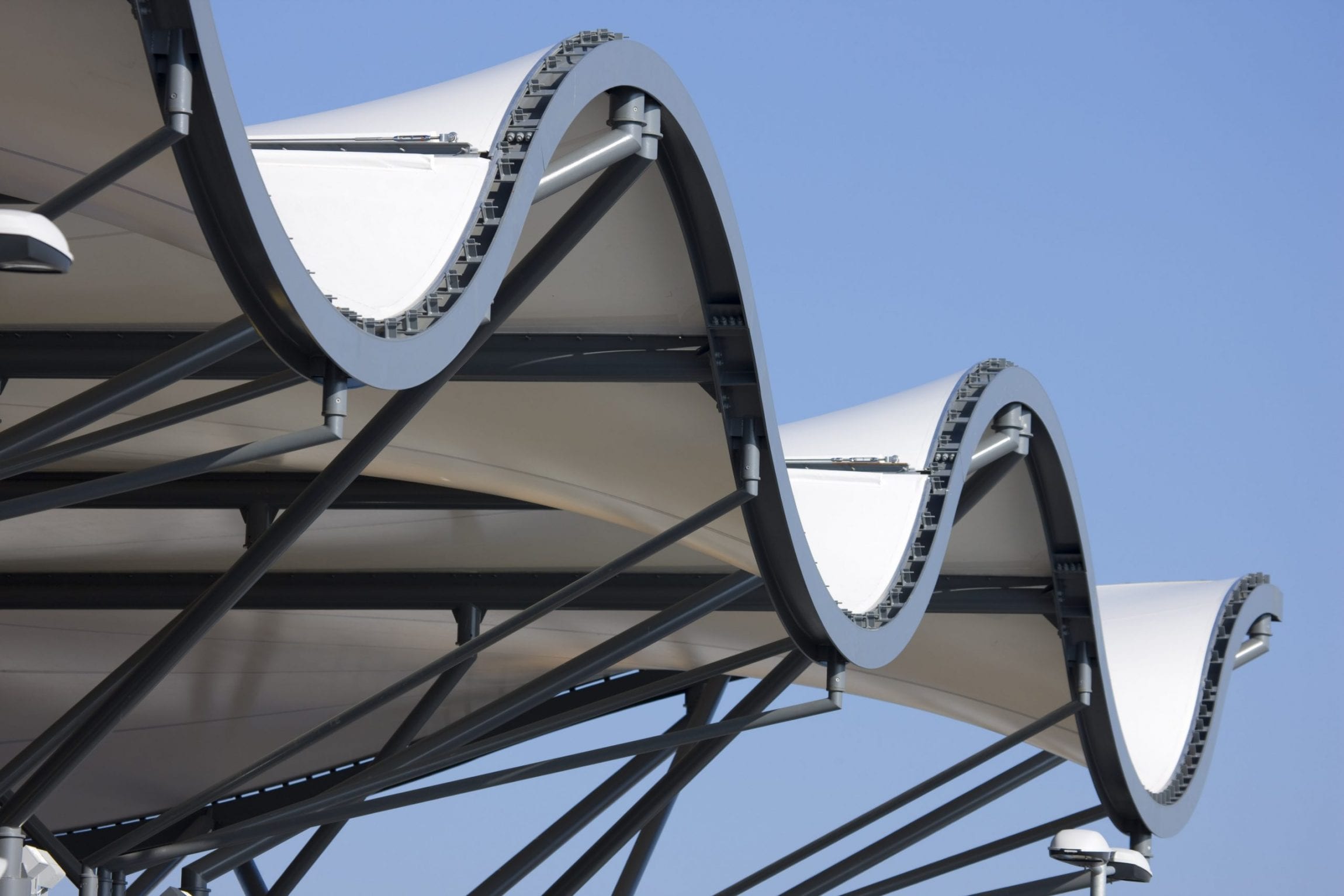
برجولات , renowned for their ability to combine aesthetic appeal with structural integrity, have revolutionized the way architects and engineers design buildings, bridges, and canopies. These structures are unique because they rely primarily on tension rather than compression, and their ability to carry significant loads with minimal material makes them a prime example of efficient design. From the graceful curves of sports stadiums to the airy canopies of public spaces, tensile structures offer the perfect balance of lightweight form and robust function. But how do they manage to be both light and strong? The science behind these fascinating structures lies in the principles of tension, materials science, and geometry.
The Basic Principle of Tensile Structures
Tensile structures are designed to carry loads through tension—pulling forces—rather than bending or compressing forces. Think of a simple tent; the fabric stretches between the poles, and the structure remains stable as long as the tension is properly distributed. Similarly, large-scale tensile structures, such as cable nets, fabric canopies, or suspension bridges, are made from materials that can withstand these pulling forces. When engineered correctly, they require significantly less material compared to traditional buildings that rely on compression and bending, making them both economical and environmentally friendly.
The primary load-bearing components of tensile structures are cables, membranes, or fabrics, which are stretched between supports. These materials are typically lightweight but incredibly strong due to their high tensile strength—the ability to resist being pulled apart. Materials like high-strength steel cables, carbon fibers, and advanced fabrics like PTFE (polytetrafluoroethylene) are commonly used for their ability to endure significant tensile stress without losing structural integrity.
The Role of Geometry in Tensile Structures
The geometry of tensile structures plays a crucial role in their strength and stability. One of the key features is the use of "prestress," where the material is intentionally stretched before it is subjected to external loads. This preloading increases the load-bearing capacity and prevents the material from sagging or distorting under pressure. The shape of the structure also influences its performance—parabolic curves or "catenary" curves are often used because they efficiently distribute the forces along the structure.
The way forces are transmitted in a tensile structure is another fundamental aspect of its strength. Tensile structures operate under a system known as "form-finding," a method used to discover the most efficient shape for a given load. Advanced computer modeling allows architects and engineers to simulate how the materials will behave under stress, optimizing both the geometry and the material choice. The result is a structure that is lightweight yet capable of bearing heavy loads without collapsing.
Materials Matter: Advancements in Strength and Flexibility
The strength of tensile structures depends largely on the materials used. Traditional materials like steel or aluminum are still widely used, but modern materials like carbon fiber and advanced polymers are gaining popularity due to their superior strength-to-weight ratios. For example, fabrics made from PTFE-coated glass fibers are widely used in large tensile roofs or membrane structures, as they are durable, weather-resistant, and flexible. These materials allow for greater spans, thinner profiles, and more aesthetically pleasing designs while maintaining a high degree of strength.
Carbon fiber is another example of a material that has revolutionized the tensile structure field. While still relatively expensive, carbon fiber's ability to bear heavy loads while being incredibly light has made it a material of choice for certain high-performance applications, such as in bridges and sports stadiums.
Conclusion
Tensile structures offer an impressive demonstration of how engineering principles can transform materials into extraordinary feats of design. By using tension, advanced materials, and precise geometry, these structures achieve remarkable strength without the need for heavy, bulky materials. The lightweight yet strong characteristics of tensile structures make them ideal for a wide range of applications, from temporary pavilions to permanent architectural landmarks. As materials science continues to advance, the potential for even more innovative and sustainable tensile structures will undoubtedly grow, offering even more efficient and elegant solutions for the future of architecture and engineering.