
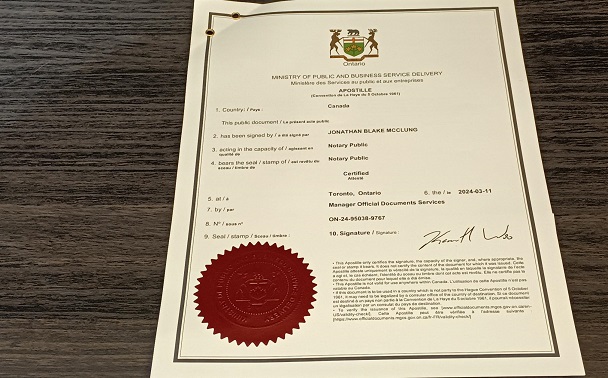
An apostille is an official certificate that authenticates the origin of a public document, such as birth, marriage, or educational certificates, for use in foreign countries that are signatories to the 1961 Hague Convention. It simplifies the process of legalizing documents, ensuring they are recognized abroad. This process can seem daunting, but with the right steps, you can successfully apostille your documents for international use.
Understanding Apostille
The apostille is a specialized certification that is placed on public documents to verify their authenticity. Under the Hague Convention, documents bearing an apostille are automatically accepted by all member countries. This eliminates the need for further legalization or embassy verification. It is important to note that an apostille does not translate a document or validate its content, only its authenticity.
Step-by-Step Process to Apostille Documents
-
Determine If You Need an Apostille
Before proceeding, confirm whether the country where your document will be used is a member of the Hague Convention. If it is not, you may need to seek embassy legalization, which is a different process. -
Obtain a Certified Copy of the Document
To apostille a document, you will need to start with an official or certified copy. For birth and marriage certificates, these can be obtained from the vital records office where the event was registered. For educational certificates, you will need to request a certified copy from the issuing institution or a notary. -
Check for Additional Requirements
Some countries may have additional requirements, such as translations of the document into the official language of the destination country. It's important to check with the authority where the document will be used to confirm these specifics. -
Locate the Competent Authority for Apostille
The apostille is typically issued by a government authority, often the Secretary of State’s office or a similar agency, depending on the country. In the U.S., each state has an office designated to issue apostilles. In other countries, ministries of foreign affairs, courts, or notary offices may handle the process. -
Submit Your Document for Apostille
Once you have your certified document, submit it to the appropriate authority. This can often be done in person, by mail, or online, depending on your country’s procedures. Many authorities require the payment of a fee for the apostille service. Be prepared to provide identification and possibly additional paperwork, such as a request form or a cover letter. -
Wait for the certificate to foreign government legalize to Be Processed
The processing time for apostilles varies. Some authorities offer expedited services, while others may take a few weeks to process your request. It’s important to plan ahead if the document is needed urgently. -
Receive the Apostilled Document
Once your document has been apostilled, it will have a stamp or a certificate attached that validates its authenticity. This apostille will ensure that your document is recognized in foreign countries that are members of the Hague Convention.
Common Types of Documents Requiring Apostille
- Birth Certificates: Used for immigration, marriage, or establishing identity in foreign countries.
- Marriage Certificates: Required for name changes, immigration procedures, or legal matters abroad.
- Educational Certificates: Essential for job applications, further studies, or credential verification in a foreign country.
Conclusion
Apostilling birth, marriage, or educational certificates for use abroad is a straightforward process but requires careful attention to detail. By following the appropriate steps, ensuring the correct authority processes your request, and allowing sufficient time for processing, you can successfully prepare your documents for international use. Understanding the apostille system and ensuring that your documents meet the required criteria will help you navigate international legal and bureaucratic processes with ease.